
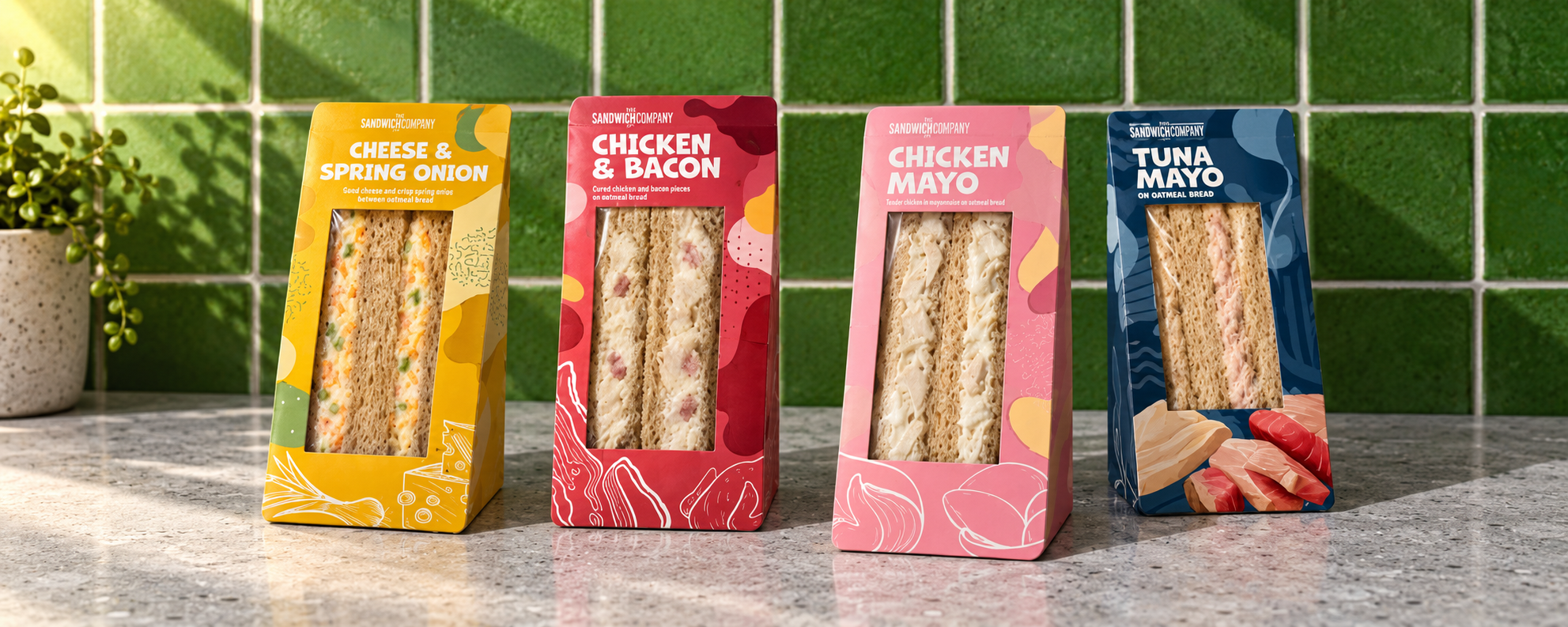
Britain buys billions of sandwiches a year, and a healthy share of them come out of a convenience store chiller between 11am and 2pm. For a shop, forecourt or cafe, ready made sandwiches are some of the most profitable square footage in the building. They are also some of the easiest to get wrong.
We have supplied pre-packed sandwiches to retailers since 2009, growing from 150 shops to over 900 by 2012 and continuing from our West Midlands manufacturing hubs today. This guide covers what we tell every new retail customer about choosing, pricing and selling packaged sandwiches.
The trade uses a few terms interchangeably, so let us pin them down. Ready made or pre-made sandwiches are made in advance rather than to order. Pre-packed sandwiches are sealed in packaging with a label, which is what sits in a retail chiller. The distinction matters legally: once a sandwich is packed before the customer orders it, full ingredient and allergen labelling rules apply. They are usually grouped either by primary protein or by style.
For a retailer, the practical categories are simpler and often include sandwiches alongside paninis, baguettes, wraps, toasties, and ciabattas. There are fresh daily lines, made overnight and delivered that morning with a short date. And there are extended shelf life lines, made to recipes and packaging that stay in date for longer. Across those pre-packed lines, common bread choices include white, wholemeal, seeded, and malted. A good chiller usually carries both.
A sandwich bought at wholesale and sold at a typical retail price returns a healthy cash margin several times a day from a single facing, and it pulls a drink, crisps and often a cake through the till with it. That meal-deal basket is where the chiller really makes its money.
The margin killers are the two Ws: waste and gaps. Every unsold sandwich eats the profit of several sold ones, and every empty shelf at 12:15 is money handed to the shop down the road. Which is why the rest of this guide is mostly about matching stock to your actual footfall.
Fresh daily ranges are your lunch engine. Made overnight, delivered before the rush, sold by mid-afternoon. Our Grab & Go range is built for exactly this: everyday favourites at everyday prices, made fresh each morning. Pre-packed wraps also suit busy lunch breaks and on-the-go trade. We covered what makes these lines sell in What Makes a Great Grab & Go Sandwich?
Extended shelf life lines do a different job. Our Long-Life range gives you budget-friendly sandwiches with more days on the date code, which suits overnight and early-morning trade, quieter sites, vending, and any shop where daily delivery is not practical. Some suppliers also offer a selection of ready-made hot sandwiches for sites that want more than cold lines. Long-life stock also acts as insurance: if fresh lines sell out early, the shelf still has something on it.
The mix depends on your site. A busy high street shop might run 80 per cent fresh. A rural forecourt might flip that entirely. A supplier who offers both, from one van, can tune the balance with you month by month.
Start from your customers, not from a brochure. A shop by a building site sells big, hearty baps, breads and rolls matched to the fillings, with premium choices like British bacon and mature cheddar. A shop near offices sells lighter options, wraps, and on Friday something a bit special, while demand often leans toward loaves with visible seeds and grains for extra fibre and a lighter tuna salad made with Greek yogurt instead of heavy mayonnaise. A school-adjacent shop lives and dies by price points.
A sensible starting range for a small chiller is eight to twelve lines: the non-negotiable classics (egg mayo, tuna mayo, ham salad, cheese and onion, chicken mayo), two or three heartier options, at least one vegetarian and one vegan line, plus coverage for gluten-free, halal, and made-without-wheat needs where relevant, and one or two premium sandwiches from a range like our Signature collection to lift the whole display. Then let the sales data argue. Whatever sells out by noon gets more facings; whatever survives to 4pm twice a week gets swapped.
Some shoppers also look for products similar to Marks & Spencer lines, including Plant Kitchen for vegan diets and Made Without Wheat sandwiches, which is a useful reminder that mainstream preferences shape the category too.
Seasonality matters more than most retailers expect. Salads, wraps with spinach, lentils, peas, and seeds mixed with proteins, and lighter lines in summer, warming and indulgent lines in winter, and new flavours often enough that regulars keep looking. Ask your supplier how often their range refreshes. If the answer is never, your chiller will look tired within a year, instead of offering a range that feels perfect to enjoy at home, at work, or outdoors.
Since October 2021, every sandwich pre-packed for direct sale must carry a full ingredient list with allergens emphasised. The most common allergens in ready-made sandwiches include wheat, milk, eggs, and fish. If you buy pre-packed sandwiches from a manufacturer, that labelling arrives done: ingredients, allergens, date code and storage instructions on every pack, produced under controlled conditions with proper allergen management.
This is a genuine advantage of buying packaged sandwiches rather than making them out the back. The compliance burden, the labelling software, the allergen segregation: all of it sits with the manufacturer, with care in allergen management and controlled labelling processes. Your job is to store them at the right temperature and rotate stock, which brings us to the practical bit.
Three habits separate shops that sell sandwiches well from shops that merely stock them.
Rotation, every delivery. New stock behind, shorter dates in front, and anything at its date pulled without mercy. Temperature, checked daily. A chiller running warm shortens real shelf life regardless of what the label says. Merchandising, kept full and facing forward. A half-empty chiller at 11:30 reads as “the good ones have gone”, even when it is simply awaiting a facing-up.
Position the chiller in sight of the door if you can, keep meal-deal partners within arm’s reach, and price clearly. None of this is complicated. All of it shows up in the till.
A sandwich sold alone is a good sale. A sandwich sold with a drink and crisps is a much better one, and the customer usually thanks you for it. If you stock ready made sandwiches without a visible meal deal, you are running the engine without the turbo.
The mechanics are simple. Pick a clear price point, sticker it prominently, and put the deal partners where the sandwich buyer is already standing. Because we supply crisps, drinks, fruit, cakes and the rest of the food-to-go fixture alongside sandwiches, most of our retailers build their whole deal from one delivery, which keeps margins visible and reordering painless.
One warning from experience: keep the deal simple. “Any sandwich, any drink, any snack” outsells clever tiered offers every time, because nobody wants to do arithmetic while holding a tuna mayo.
A picture of how this plays out. A forecourt we supply started with a cautious eight lines, all classics, all fresh daily. Sales were steady but flat, and Mondays wasted stock because weekend footfall was unpredictable.
Three changes moved the numbers. A third of the range switched to our long-life lines to absorb the unpredictable days. Two spiced lines and a vegan option came in for the weekday trade heading to the industrial estate. And the chiller gained a meal deal sticker and a facing-up routine before the 11:30 rush.
The result was the pattern we see repeatedly: waste fell, the range got braver rather than bigger, and the chiller went from an afterthought to one of the best-earning fixtures in the shop. None of it required more space, only better decisions about what filled it.
The short version of our guide to choosing a wholesale sandwich supplier: ask where the sandwiches are made, how often they deliver, what shelf life each range carries, how allergen labelling is handled, and what happens when you need to change an order. Then ask who else they supply and check universities and schools too.
We answer all of those on our Retail & Supply page, and the honest pitch is short: our own manufacturing, our own refrigerated fleet, daily delivery across England and Wales, and ranges from budget long-life to premium Signature, alongside the crisps, drinks, cakes, pies and pasties that fill the rest of the food-to-go fixture. Pre-packaged sandwiches are widely used in universities across the UK, and some suppliers, including Tiffin Sandwiches, serve over 1,000 universities and schools. Larger suppliers may also support conferences and large-scale events, delivering to more than 4,000 locations in the UK and sometimes providing marketing support. Those are useful checks for building trust in a supplier’s reliability.
What shelf life do ready made sandwiches have? Fresh daily lines typically carry a one to two day code and are meant to sell the day they land. Extended shelf life lines carry several days more. Ask for the specific figures per range, because they drive your ordering pattern. Shelf life expectations can vary across products, including gluten-free lines.
Can a small shop order pre-packed sandwiches? Yes. Minimum orders exist but a good supplier tailors them to the site. We supply everything from single forecourts to shop groups, and if you have just opened, we can usually add you to an existing route quickly.
Do I need to do my own allergen labelling? Not for sandwiches that arrive pre-packed from a manufacturer: the pack label carries the full ingredient and allergen declaration. Ready-made sandwiches often combine meats, cheeses, spreads, and fresh vegetables, which is why full declarations matter. You are responsible for correct storage and for not repacking or altering the product.
How many sandwich lines should a small shop stock? Eight to twelve is the sweet spot for most small chillers. Fewer than eight and the display looks thin; many more and slow lines start generating waste. The mix should reflect current demand for fresh, clean-label, and plant-based ingredients. Shoppers also often prefer fresh poultry or fish over processed deli meats and may look for lower-calorie spreads or salad-based fillings. Grow the range only when the till data justifies it, one line at a time, and retire the weakest seller each time you add.
What temperature should the sandwich chiller run at? Below 5°C, checked and recorded daily. It protects the printed shelf life, keeps you right with environmental health, and is the first thing to review if you ever feel a range is dating early.
If your sandwich shelf is not earning what it should, the fix usually starts with the supplier. Talk to The Sandwich Company about your site, and we will suggest a starting range, delivery schedule and price structure built around your actual trade, with a touch of support for your mix. Find details on our website or get in touch to discuss the range, and do not forget ordering support when reviewing suppliers.